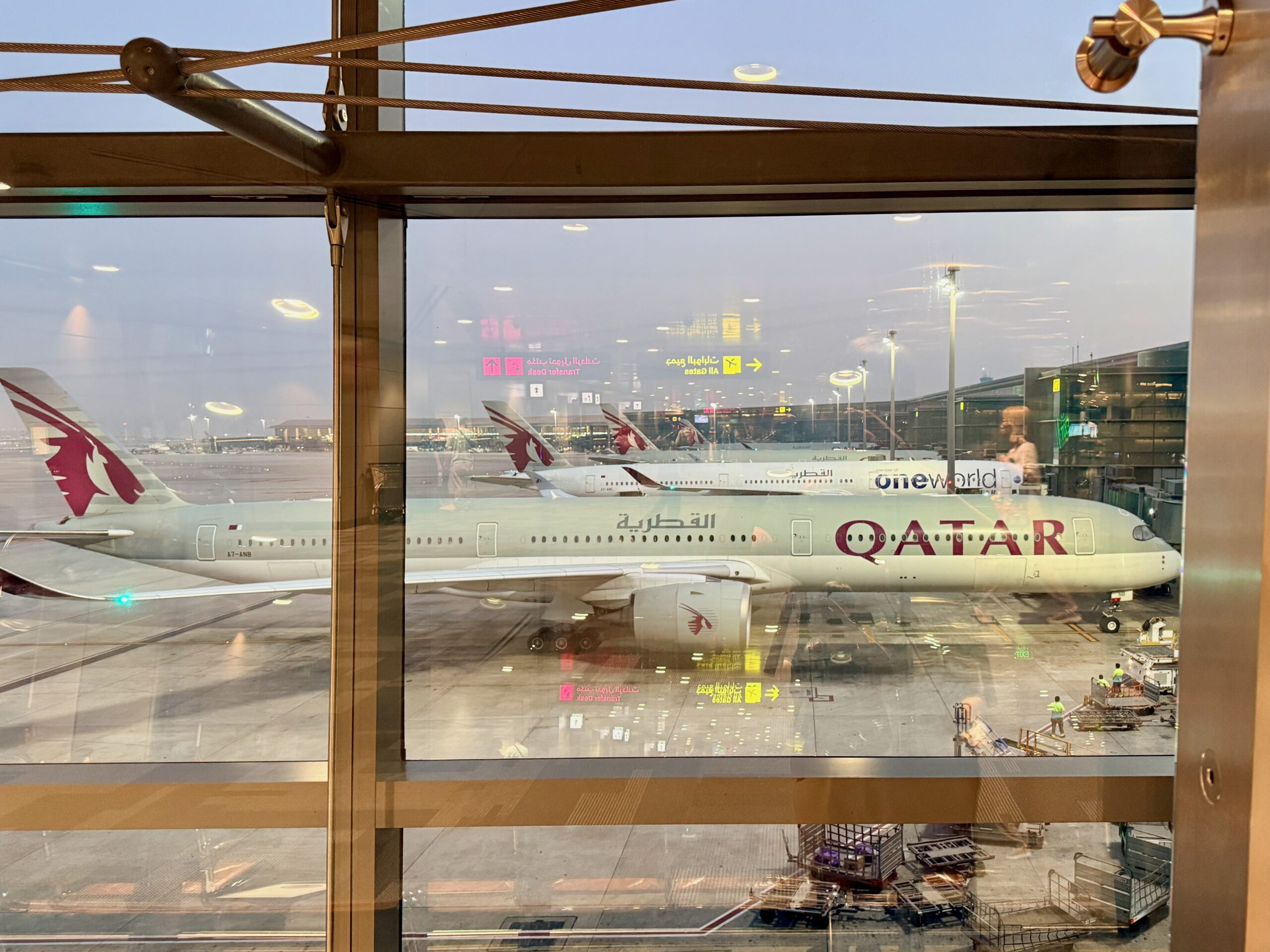
I am writing this while waiting for a connection on my way to the annual meeting of the International Society for Environmental Epidemiology (ISEE). For the first time, I flew on a plane equipped with Starlink. Until now, in-flight internet had always meant something expensive and slow. Starlink, by contrast, was free and fast enough that using it required no patience at all. It was genuinely useful. I did not get any work done—the flight was overnight, and sleeping kept me busy—but I could message my wife and check my email.
I was delighted by the convenience, but another thought intruded. For this effortless internet to work, tens of thousands of satellites must orbit close to Earth, making astronomical research more difficult. All that disruption so that I could send a few messages. I felt guilty for a moment, then carried on. “The system already exists,” I told myself. You cannot very well refuse to use what is already there, can you?
This seems to be the shape of many environmental problems. Climate change, air pollution, endocrine-disrupting chemicals, electromagnetic fields: they all make individual life more convenient while imposing costs on the planet. There is little any one person can do, and once the convenience exists, we use it. The problem is built into the structure of global society. We are all both accomplices and victims. (Of course, some accomplices bear far more responsibility than others.) Even on this trip, a direct flight would have produced fewer emissions, but the indirect route cost me less. So that is the route I chose.
South Korea has taken a fairly active approach to reducing air pollution. As public concern grew in the mid-2010s, so did the political will to act. There is an international precedent as well. CFCs—the gases commonly known by the trade name Freon, which damage stratospheric ozone—have largely been phased out through sustained international cooperation.
What, then, of climate change? I think public awareness is already high. What remains insufficient is political will commensurate with that awareness. Cutting carbon emissions is technically and structurally much harder than phasing out CFCs. CFCs required replacing a limited family of chemicals; carbon runs through the whole industrial system. Yet political will to curb CFCs was not strong from the beginning either. The clear image of an ozone hole heightened public concern, while new substitute technologies made political action easier. Incentives gradually made phasing out CFCs the more attractive choice for both industry and governments. These forces reinforced one another and ultimately allowed the world to bring the problem under control. With climate change, political and economic calculations are instead preventing that virtuous cycle from taking hold.
As one researcher, I do not have a solution. I can only work to identify the health consequences of these problems, in the hope that the evidence might strengthen the resolve and rationale for addressing them. But whether our share of responsibility is large or small, none of us can escape being complicit.