A senior colleague once told me about his doctoral dissertation. He had chosen Asian dust as the topic, planning to collect data and analyze its links to health—and that year, as luck would have it, the dust never came. Something similar happened when we started a research project on fine particulate matter: there were so few high-pollution days that we joked the research itself was to blame.
Then a recent study made me wonder whether that was entirely a joke. It is a paper published in PNAS on September 14, titled “Air pollution after the shutdown of US embassy monitoring.”
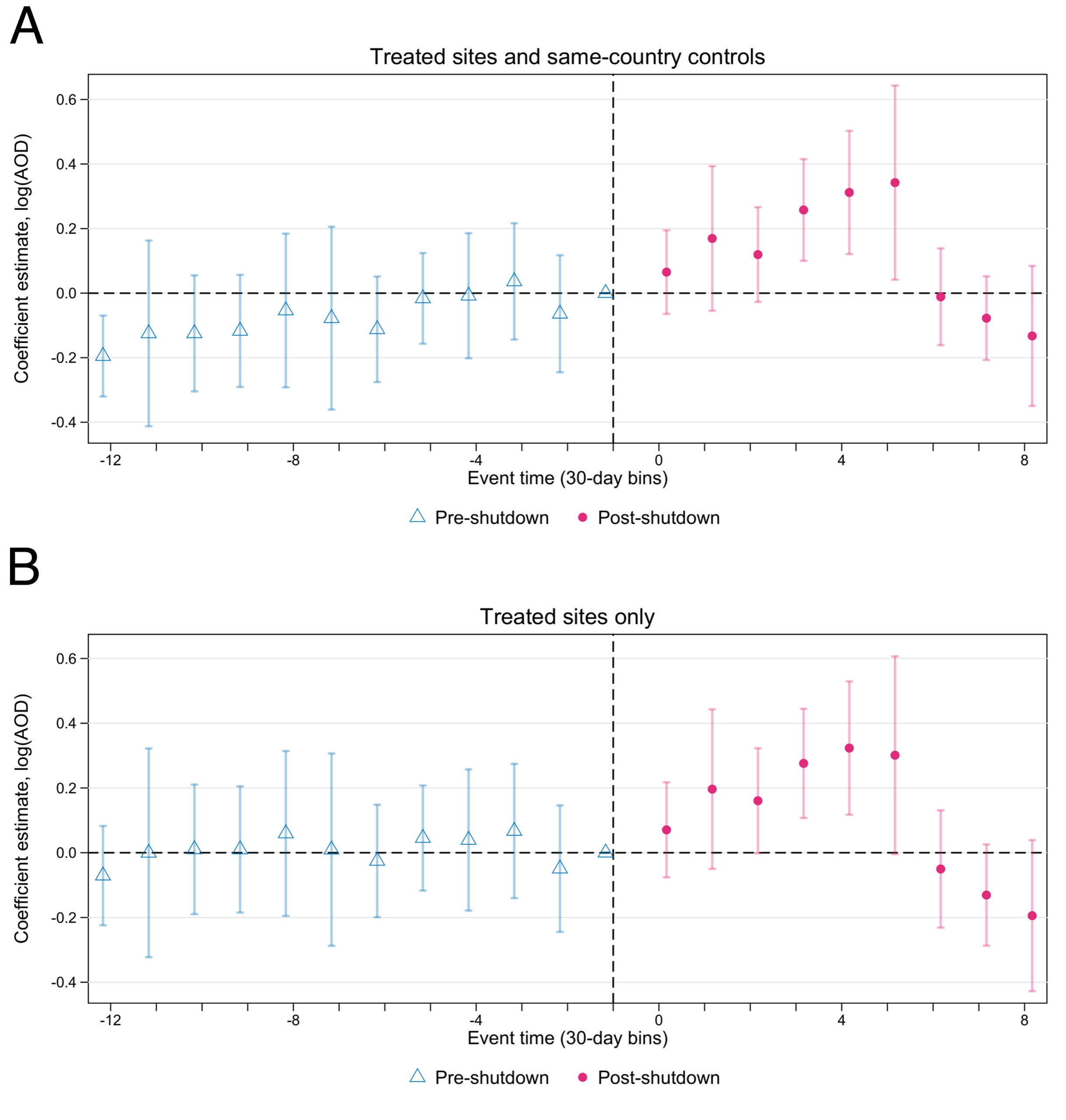
The study compares air pollution in cities around the world before and after the Trump administration, citing costs, shut down the air-quality monitors that US embassies had been operating. In many of these cities the embassy monitor was the only source of data, and after the shutdown even that was gone, so the authors used a satellite-based measure of airborne particles (aerosol optical depth). Rather than simply comparing before and after, they used a quasi-experimental method called difference-in-differences, which makes the evidence fairly strong.
The results are striking. After the embassies stopped measuring, particle levels rose over the following months. The study design cannot explain why, but it is reasonable to suspect that monitoring itself had been holding emissions down.
Perhaps our joke about the effect of monitoring dust and fine particles was a genuine insight after all. I can only admire the authors for taking what we laughed off and actually putting it to the test.